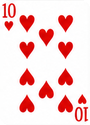
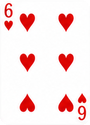
Weak suited hand
Ten-Six Suited
T6s gains a flush route and some backdoor connectivity, but the Six kicker still creates domination risk. Open it mainly from the cutoff or button when the table is tight. Defend the big blind when the price and stack depth allow post-flop play.
How to play T6s by position and stack size
| Recommended action | UTG8-max | UTG18-max | LJ6-max | HJ6-max | CO6-max | BTN6-max | SB6-max |
|---|---|---|---|---|---|---|---|
| 100bb+ | Fold | Fold | Fold | Fold | Fold | Open | Limp |
| 40-100bb | Fold | Fold | Fold | Fold | Open | Open | Limp |
| 27-40bb | Fold | Fold | Fold | Fold | Fold | Open | Limp |
| 20-26bb | Fold | Fold | Fold | Fold | Fold | Open | Limp |
| 16-19bb | Fold | Fold | Fold | Fold | Fold | Fold | Limp |
| 11-15bb | Fold | Fold | Fold | Fold | Fold | Fold | Jam |
| 7-10bb | Fold | Fold | Fold | Fold | Fold | Fold | Limp |
| 6bb- | Fold | Fold | Fold | Fold | Fold | Jam | Jam |
Position helps T6s realize its suited and pair equity.
Use it only in a planned bluff range against a wide late-position open.
Suitedness helps, but a weak top pair still needs pot control.
Do not turn a speculative hand into a default shove.
T6s has too little room to realize its draws.
Strong against
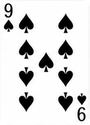
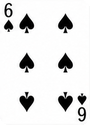
96s shares the Six but has the weaker kicker, making a dominated pair that can still pay T6s.
Weak against
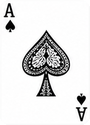
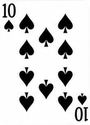 ATs
ATsATs shares the Ten with the better kicker, so T6s can make a costly second-best pair.
Flop classes
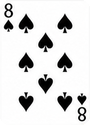
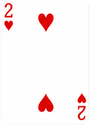
With T♠ 6♠ on A♠ 8♠ 2♦, continue more often when position or price supports the draw.
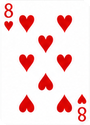
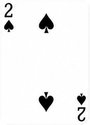
On 9♣ 8♦ 2♠, a Seven completes the 6-7-8-9-T straight.
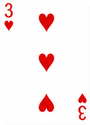
On T♠ 8♣ 3♦, keep the pot small because higher Tens dominate this pair.
Strategic notes
- Call selectively in position: Keep the pot manageable and continue mainly with useful draws.
- Fold out of position against tight ranges: The suited label alone does not justify defending.
- Value the flush draw: With two same-suit hole cards and two matching flop cards, T6s has a flush draw, not a made flush.
- Separate top pair from strong value: A Ten on a dry board is often a check-back or bluff-catcher.
- Use connectivity when it is real: T6s has a gutshot to a Seven only when the flop supplies the required neighboring ranks.