Speculative suited connector
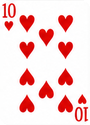
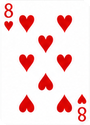
Ten-Eight Suited
T8s has real straight connectivity and a flush route, but a Ten pair is still exposed to domination. It is more playable from late position, in the big blind, and with deeper stacks. Exact draw classification matters more than the suited label alone.
How to play T8s by position and stack size
| Recommended action | UTG8-max | UTG18-max | LJ6-max | HJ6-max | CO6-max | BTN6-max | SB6-max |
|---|---|---|---|---|---|---|---|
| 100bb+ | Fold | Fold | Fold | Open | Open | Open | Limp |
| 40-100bb | Fold | Fold | Fold | Open | Open | Open | Limp |
| 27-40bb | Fold | Fold | Fold | Fold | Open | Open | Limp |
| 20-26bb | Fold | Fold | Fold | Fold | Open | Open | Limp |
| 16-19bb | Fold | Fold | Fold | Fold | Fold | Jam | Jam |
| 11-15bb | Fold | Fold | Fold | Fold | Jam | Jam | Jam |
| 7-10bb | Fold | Fold | Jam | Jam | Jam | Jam | Jam |
| 6bb- | Fold | Fold | Jam | Jam | Jam | Jam | Jam |
T8s has enough connectivity for early opens too, while position and depth still affect the open, limp, or fold balance.
Use it against wide opens when the stack depth supports post-flop play.
T8s benefits from implied odds and board coverage.
Suited connectivity alone is not a reason to shove.
The Ten kicker and reverse implied odds become costly.
Strong against
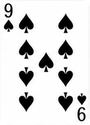
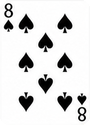
98s shares the Eight but has the weaker kicker, making a dominated pair that can still pay T8s.
Weak against
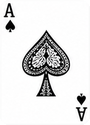
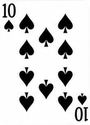 ATs
ATsATs shares the Ten with the better kicker, so T8s can make a costly second-best pair.
Flop classes
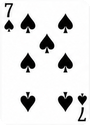
With T♠ 8♠ on A♠ 7♠ 2♦, continue according to position, sizing and stack depth.
On 9♣ 7♦ 2♠, a Six or Jack completes the 7-8-9-T-J straight.
On T♠ 8♣ 2♦, bet for value cautiously because stronger Ten-x hands dominate the top pair.
Strategic notes
- Call selectively in position: Continue when sizing and depth leave room to realize draws.
- Fold more often out of position: A dominated Ten pair is a poor reason to defend widely.
- Count a real flush draw: With two same-suit hole cards and two matching flop cards, four spades are visible and T8s has a flush draw.
- Separate straight draws: T8s has an open-ended straight draw when the flop supplies the required neighboring ranks.
- Control one pair: A Ten on a dry board is often a check-back when the opponent has the range advantage.