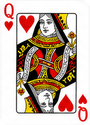
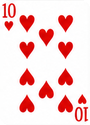
Playable suited broadway
Queen-Ten Suited
QTs combines two connected broadway cards with a suited draw. It can open from many positions and defend at the right price, but top pair is vulnerable and a flush made with QTs is not always the nut flush.
How to play QTs by position and stack size
| Recommended action | UTG8-max | UTG18-max | LJ6-max | HJ6-max | CO6-max | BTN6-max | SB6-max |
|---|---|---|---|---|---|---|---|
| 100bb+ | Open | Open | Open | Open | Open | Open | Limp |
| 40-100bb | Open | Open | Open | Open | Open | Open | Limp |
| 27-40bb | Open | Open | Open | Open | Open | Open | Limp |
| 20-26bb | Open | Open | Open | Open | Open | Open | Limp |
| 16-19bb | Open | Open | Open | Open | Jam | Open | Limp |
| 11-15bb | Fold | Open | Jam | Jam | Jam | Jam | Jam |
| 7-10bb | Jam | Jam | Jam | Jam | Jam | Jam | Jam |
| 6bb- | Jam | Jam | Jam | Jam | Jam | Jam | Jam |
Its connectivity and suitedness give it more profitable opens than an isolated queen.
QTs can apply pressure, while calling is often preferable when position and price are good.
QTs can make strong pairs, straights, and flushes, but it still needs room to realize that equity.
Tournament ICM can remove a shove that chip EV alone would suggest.
QTs should not continue simply because it is suited.
Strong against
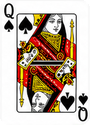
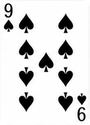
Q9s shares the Queen but has the weaker kicker, making a dominated pair that can still pay QTs.
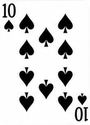
When the shared Ten pairs, QTs keeps the better kicker and can value-bet against T9s.
Weak against
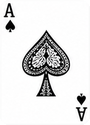 AQ
AQAQ shares the Queen with the better kicker, so QTs can make a costly second-best pair.
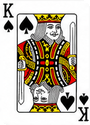 KQ
KQIf the shared Queen pairs, KQ keeps the kicker edge and can take several bets from QTs.
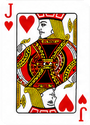 QJ
QJThe stronger side card in QJ makes top pair dangerous for QTs to overplay.
Flop classes
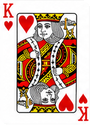
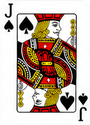
QTs has the Broadway straight. Keep QTs in a value line while checking which higher flush or full-house redraws the board can create.
QTs already makes a king-high straight. Bet for value, but account for board changes that can reduce the number of hands able to pay.
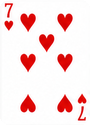
Top pair is ahead of missed overcards, yet AQ, KQ, sets, and some strong draws make oversized pots dangerous without a range reason.
Strategic notes
- Call: Against a wide 3-bet range, QTs can call when it keeps position and receives a workable price.
- 3-bet: QTs can be a polarized 3-bet when the opener folds enough, while calling is often preferable with position and a fair price.
- Fold: QTs usually folds to a value-heavy 4-bet range.
- Continue selectively: A call can appear in a late-position or blind-versus-blind tree with favorable sizing and ranges, but it is not automatic.
- Connectivity: With QTs, AKJ makes a Broadway straight. KJ9 and J98 also make a straight, so these boards require decisions about a made straight and redraws rather than a routine one-pair line.
- Flushes: A flush made with QTs is not necessarily the nut flush because higher suited cards can hold a better draw or made flush.
- Top pair: A queen or ten can give top pair, but QTs remains vulnerable to stronger queens, overpairs, and improving draws.