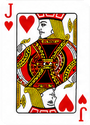
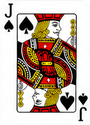
Premium pair
Pocket Jacks
JJ is a strong preflop pair with more value than most hands in an opening range, but it is vulnerable to higher pairs and overcards. It can 3-bet for value against wide opens, while tight 4-bets, ICM pressure, and high-card flops favor caution.
How to play JJ by position and stack size
| Recommended action | UTG8-max | UTG18-max | LJ6-max | HJ6-max | CO6-max | BTN6-max | SB6-max |
|---|---|---|---|---|---|---|---|
| 100bb+ | Open | Open | Open | Open | Open | Open | Limp |
| 40-100bb | Open | Open | Open | Open | Open | Open | Limp |
| 27-40bb | Open | Open | Open | Open | Open | Open | Limp |
| 20-26bb | Open | Open | Open | Open | Open | Open | Limp |
| 16-19bb | Open | Open | Open | Open | Open | Open | Limp |
| 11-15bb | Open | Open | Open | Open | Open | Open | Limp |
| 7-10bb | Jam | Jam | Jam | Jam | Jam | Jam | Jam |
| 6bb- | Jam | Jam | Jam | Jam | Jam | Jam | Jam |
JJ is a clear first-in hand, but the Small Blind line can include limp as well as open.
A value 3-bet charges hands such as AT, KQ, and smaller pairs that can continue too widely.
Calling can keep bluffs and lower pairs in the pot when position and effective depth support it.
An open-shove or reshove can be reasonable, but ICM may make preserving chips more valuable than taking a close gamble.
Against a range weighted toward QQ+, AK, and few bluffs, JJ does not need to prove its preflop strength.
Strong against
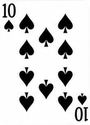
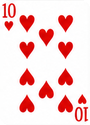
TT is a lower pair that can call preflop and still pay value from JJ.
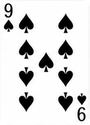
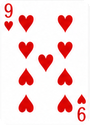
99 has even less high-card protection, so JJ can target it when the range continues with one pair.
Weak against
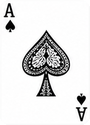
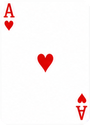 AA
AAAA is ahead of JJ preflop. JJ needs a set or a disciplined bluff-catching plan when AA continues strongly.
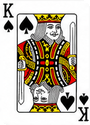
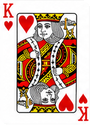 KK
KKKK has the stronger starting pair, leaving JJ reliant on a set or a range that contains enough bluffs.
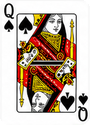
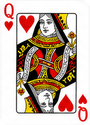 QQ
QQQQ is ahead of JJ preflop. JJ can target bluffs and lower pairs, but should not treat its pair as automatic value against strong action.
Flop classes
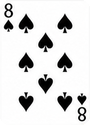
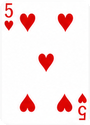
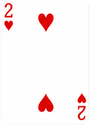
On 8♠ 5♦ 2♥, JJ is an overpair and can bet for value against lower pairs and draws.
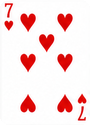
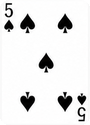
On J♦ 7♦ 5♣, JJ makes top set. The connected diamonds are absent here, so value can be built without inventing a flush draw.
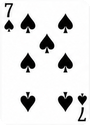
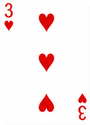
On K♣ 7♠ 3♥, JJ is a pair below the King. It can check and call selected bets when the opponent still has missed broadways.
Strategic notes
- Call: A call keeps hands such as ATs, KQs, and bluffs in the pot when the 3-bet is not too large.
- Jam: With a short effective stack, jamming can deny equity to overcards and avoid a difficult postflop SPR.
- Evaluate carefully: A 4-bet range is often stronger than a 3-bet range, especially from early position or near a pay jump.
- Call: A deep call needs enough bluffs and lower pairs in the range to avoid isolating JJ against QQ+ and AK.
- Bluff-catch: On A♣ 8♦ 4♠, JJ is below the top card. It can beat bluffs, but large bets often represent an Ace or a higher pair.
- Check top set: On J♣ 8♦ 4♠, JJ makes top set. Betting can charge draws and lower pairs, while checking can keep bluffs in the opponent's range.
- Bet for value: On 9♣ 6♦ 2♥, JJ is an overpair and can value-bet lower pairs and draws. The sizing still depends on position and ranges.