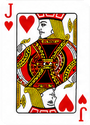
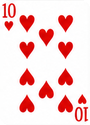
Strong suited connector
Jack-Ten Suited
JTs is a very playable suited connector that can make strong value hands and real draws. On K-J-T it makes two pair, and on Q-9-6 it has an open-ended straight draw, so it should continue with a direct draw or useful pair equity rather than because it is simply suited.
How to play JTs by position and stack size
| Recommended action | UTG8-max | UTG18-max | LJ6-max | HJ6-max | CO6-max | BTN6-max | SB6-max |
|---|---|---|---|---|---|---|---|
| 100bb+ | Open | Open | Open | Open | Open | Open | Limp |
| 40-100bb | Open | Open | Open | Open | Open | Open | Limp |
| 27-40bb | Open | Open | Open | Open | Open | Open | Limp |
| 20-26bb | Open | Open | Open | Open | Open | Open | Limp |
| 16-19bb | Fold | Open | Open | Open | Jam | Open | Limp |
| 11-15bb | Fold | Jam | Jam | Jam | Jam | Jam | Limp |
| 7-10bb | Jam | Jam | Jam | Jam | Jam | Jam | Jam |
| 6bb- | Jam | Jam | Jam | Jam | Jam | Jam | Jam |
It is strong enough to enter first in when the structure supports board coverage.
It can work in a few pressure trees, but it should not be forced into every re-raise spot.
The suited version has enough playability to defend cleanly in the right spots.
Shallow stacks can turn JTs into a practical all-in.
It should not be treated as a hand that can continue forever against pressure.
Strong against
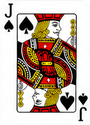
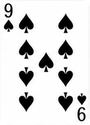
J9s shares the Jack but has the weaker kicker, making a dominated pair that can still pay JTs.
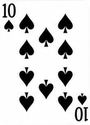
When the shared Ten pairs, JTs keeps the better kicker and can value-bet against T9s.
Weak against
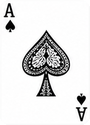 AJs
AJsAJs shares the Jack with the better kicker, so JTs can make a costly second-best pair.
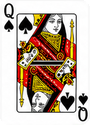 QJs
QJsIf the shared Jack pairs, QJs keeps the kicker edge and can take several bets from JTs.
Flop classes
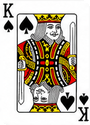
On K-J-T, JTs makes two pair and can value bet, but strong pressure still matters because the board is very dynamic.
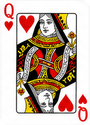
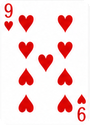
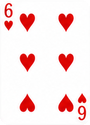
On Q-9-6, JTs has an open-ended straight draw and can continue as a real semi-bluff.
On paired low boards, JTs often has too little immediate value to force a big pot.
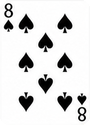
On 8♠ 5♦ 2♣, JTs has no pair or immediate draw. Suitedness alone is not a reason to bluff heavily.
Strategic notes
- Call in position when the opener is wide enough and the price is fair.
- Do not auto-fold it as if suited connectivity had no value.
- Avoid heavy preflop aggression when the range is clearly too strong and your realization will be poor.
- Usually fold to a strong 4-bet.
- A few shallow reshove spots can exist, but they should be the exception rather than the rule.
- JTs wants playability, not a forced stack-off tree.
- The examples below cover JTs's main post-flop branches: made two pair, an open-ended draw, and weak misses. Let position, ranges and action decide whether a strong draw becomes a semi-bluff or a missed flop should be released.
- Do not overvalue the fact that JTs is suited: a paired or disconnected flop can leave it with little more than backdoor potential.