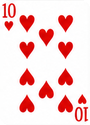
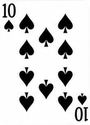
Middle pocket pair that often faces overcards
Pocket Tens
TT is a medium pair that can be a strong overpair on low flops and a pair below the board's top card on many high flops. Its preflop plan changes with position, 3-bet size, effective depth, and tournament ICM more than AA, KK, or JJ.
How to play TT by position and stack size
| Recommended action | UTG8-max | UTG18-max | LJ6-max | HJ6-max | CO6-max | BTN6-max | SB6-max |
|---|---|---|---|---|---|---|---|
| 100bb+ | Open | Open | Open | Open | Open | Open | Limp |
| 40-100bb | Open | Open | Open | Open | Open | Open | Limp |
| 27-40bb | Open | Open | Open | Open | Open | Open | Limp |
| 20-26bb | Open | Open | Open | Open | Open | Open | Limp |
| 16-19bb | Open | Open | Open | Open | Open | Open | Limp |
| 11-15bb | Open | Open | Open | Open | Open | Open | Limp |
| 7-10bb | Jam | Jam | Jam | Jam | Jam | Jam | Jam |
| 6bb- | Jam | Jam | Jam | Jam | Jam | Jam | Jam |
TT is strong enough to open widely, though the opening range becomes tighter from early position in some formats.
A 3-bet can get value from lower pairs and suited broadways, but TT is not an automatic value 3-bet against every position.
Calling works best when the 3-bettor still has lower pairs, bluffs, and enough room for postflop decisions.
A shove denies overcards their free equity and avoids difficult decisions after a call.
TT should not continue simply because it was a strong opening hand.
Strong against
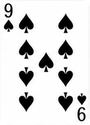
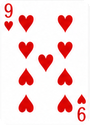
99 can call with a lower pair, giving TT a practical value target when the action remains moderate.
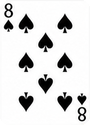
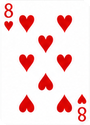
88 has fewer overpair combinations to rely on and can still pay TT with a lower pair.
Weak against
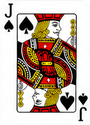
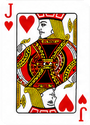 JJ
JJJJ is a higher pair than TT and can continue for value when TT has no set or strong bluff-catching reason.
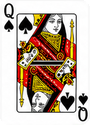
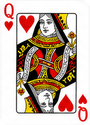 QQ
QQQQ is two steps higher and leaves TT looking for a Ten, a set, or a very specific bluff-catching spot.
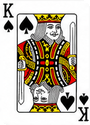
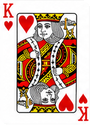 KK
KKKK is ahead preflop and can keep TT in the pot as a dominated lower pair.
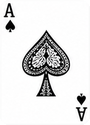
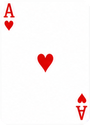 AA
AAAA is the strongest pair and makes TT a poor candidate for large one-pair pots without improvement.
Flop classes
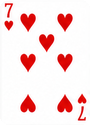
On K♠ 7♥ 3♦, TT is a pair below the King with showdown value against missed hands. It usually prefers control to a large value pot.
On 8♣ 5♦ 2♥, TT is an overpair and can value bet more freely while watching for sets and backdoor draws.
On 9♣ 8♦ 7♥, TT is an overpair with an open-ended straight draw on the board. Many turns change the value of one pair, so large bets need a range reason.
On T♦ 7♦ 4♦, TT flops top set, but the three diamonds give suited holdings a made flush. The set's value depends on redraws and the action.
Strategic notes
- Call or 4-bet selectively according to position, size, and the opener's range.
- A call is more attractive deep when the 3-bettor has lower pairs and bluffs that will miss the flop.
- Against a tight range or a large size, folding preserves chips that TT cannot recover often enough after the flop.
- Fold against most clearly value-heavy 4-bets, especially from early positions or at a final table.
- A rare continue requires a favorable price, enough bluffs, and an effective depth that does not force TT to stack off as a pair below QQ+.
- ICM can make folding preferable even when a chip-EV calculation would call at a short or medium depth.
- Value line: TT is an overpair on low flops and can bet for value against lower pairs and draws.
- Control line: TT is below a King. Checking or using a small in-position bet avoids forcing a large pot against Kx and strong draws.
- Common mistake: Calling every high-card flop a bluff spot ignores that TT still has showdown value against missed hands and loses value when it folds too quickly.