Small pair
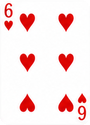
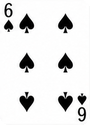
Pocket Sixs
66 sits between small pairs and medium pairs. It still benefits from set mining, but it has useful showdown value on many low flops. It is an overpair below Six and an underpair on any flop with a higher card, so position and stack depth shape the plan.
How to play 66 by position and stack size
| Recommended action | UTG8-max | UTG18-max | LJ6-max | HJ6-max | CO6-max | BTN6-max | SB6-max |
|---|---|---|---|---|---|---|---|
| 100bb+ | Open | Open | Open | Open | Open | Open | Open |
| 40-100bb | Open | Open | Open | Open | Open | Open | Open |
| 27-40bb | Open | Open | Open | Open | Open | Open | Limp |
| 20-26bb | Open | Open | Open | Open | Open | Open | Limp |
| 16-19bb | Open | Open | Open | Open | Open | Open | Limp |
| 11-15bb | Open | Open | Open | Jam | Open | Open | Limp |
| 7-10bb | Jam | Jam | Jam | Jam | Jam | Jam | Limp |
| 6bb- | Jam | Jam | Jam | Jam | Jam | Jam | Jam |
66 can open more often than 22-55, especially from the cutoff or button.
It can apply fold equity against wide opens, but it is not a default value 3-bet.
Deep stacks preserve set value, while low boards give 66 some non-set showdown value.
Use stack depth and fold equity to choose the shove, not the pair label alone.
66 becomes difficult to realize against repeated overcard pressure.
Strong against
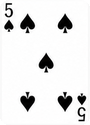
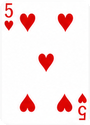
55 can call with a lower pair, so 66 can take value when the action stays compatible with one-pair hands.
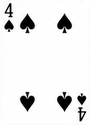
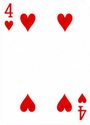
44 has a smaller pair and a narrower set of profitable improvements, making it a useful value target for 66.
Weak against
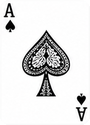
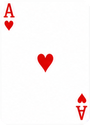 AA
AAAA is ahead of 66 preflop. 66 generally needs a set or a carefully chosen bluff-catching line against strong action.
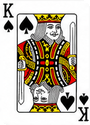
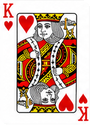 KK
KKKK is a higher pair and can keep 66 in the pot as a dominated lower pair.
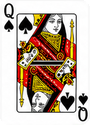
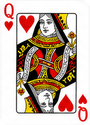 QQ
QQQQ remains ahead of 66, while 66 needs a set to turn the matchup into a strong value situation.
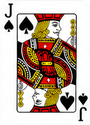
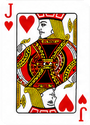 JJ
JJJJ is another higher pair that can value-bet against 66 when the range continues.
Flop classes
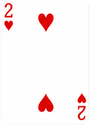
On 6♣ Q♦ 2♥, 66 has flopped a set and can value bet against queens, draws, and lower pairs.
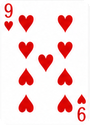
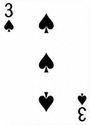
On A♠ 9♦ 3♣, 66 is an underpair with two usual outs to a set. It is sensitive to ace, king, and queen pressure.
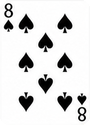
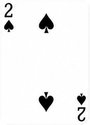
On 8♣ 4♥ 2♠, 66 is an overpair to the board and can protect its showdown value with a selective bet.
Strategic notes
- Call: Prefer position, a manageable sizing, and enough effective depth for set value.
- Fold: Fold more often against tight ranges, out of position, or when several overcards are likely to dominate future streets.
- Jam: Use a short-stack shove only when the ranges and fold equity justify it.
- Fold: Usually fold to a strong 4-bet because higher pairs and premium overcards have the advantage.
- Call: Continue only with an exceptional price and enough depth to make the set chase worthwhile.
- Value: On 6♣ 4♦ 2♥, 66 has a set and can value-bet lower pairs and draws.
- Control: On 5♣ 3♦ 2♥, 66 is an overpair with two cards that can improve it to a set. A small in-position call can still be reasonable against a range with bluffs.
- Mistake: Do not treat 66 as a permanent bluff-catcher. Each overcard and each additional barrel changes its showdown value.