Second-best pair
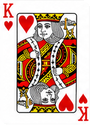
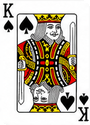
Pocket Kings
KK is a premium preflop favorite, but an Ace on the board turns it into a pair below the top card. It can build pots on low and King-high flops, while Ace-high boards and coordinated textures call for more checking and smaller bets.
How to play KK by position and stack size
| Recommended action | UTG8-max | UTG18-max | LJ6-max | HJ6-max | CO6-max | BTN6-max | SB6-max |
|---|---|---|---|---|---|---|---|
| 100bb+ | Open | Open | Open | Open | Open | Open | Limp |
| 40-100bb | Open | Open | Open | Open | Open | Open | Open |
| 27-40bb | Open | Open | Open | Open | Open | Open | Open |
| 20-26bb | Open | Open | Open | Open | Open | Open | Limp |
| 16-19bb | Open | Open | Open | Open | Open | Open | Limp |
| 11-15bb | Open | Open | Open | Open | Open | Open | Limp |
| 7-10bb | Jam | Jam | Jam | Jam | Jam | Jam | Limp |
| 6bb- | Jam | Jam | Jam | Jam | Jam | Jam | Jam |
KK is present from every opening seat, but the Small Blind can mix open and limp at several depths.
Raising charges broadways and smaller pairs while building a pot against worse value hands.
Calling can keep those bluffs in and avoid isolating against only AA.
An all-in protects KK from cheap overcards and realizes its preflop value. the range contains enough worse hands.
The rare fold comes from the opponent's range and the tournament context, not from fear of a single random Ace.
Strong against
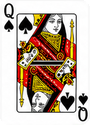
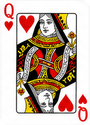
QQ is a lower premium pair that can call a raise or 3-bet, allowing KK to value-bet when it continues.
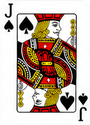
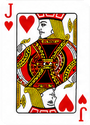
JJ can continue preflop with a lower pair and pay value bets. KK keeps the clear starting-hand edge.
Weak against
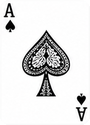
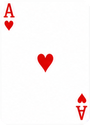 AA
AAAA has the stronger starting pair, so KK is mainly looking for a set or a bluff-catching reason when the action stays heavy.
Flop classes
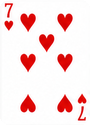
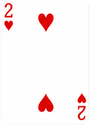
On K♣ 7♥ 2♦, KK makes top set. Value betting is preferred when worse Kx, pairs, and backdoor draws can continue.
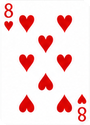
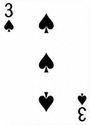
On A♠ 8♥ 3♣, KK is a pair below the top card. Small bets and checks protect KK from turning a marginal value spot into a large loss.
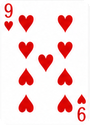
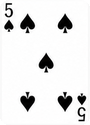
On 9♥ 5♠ 2♦, KK is an overpair with few immediate draws on the board. It can bet for value while respecting sets and slow-played two pair.
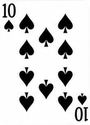
On T♠ 7♠ 4♠, KK is an overpair on a board where a suited hand can already have a flush. The King of spades changes the blocker and value-betting picture.
Strategic notes
- 4-bet for value against most ranges. Keep enough worse pairs and bluffs in the opponent's continuing range before choosing a size.
- Call deep when the 3-bet range is wide and the opponent will continue betting with hands such as QQ, JJ, and AK.
- On shallow stacks, a direct raise or jam protects KK from overcards and avoids difficult low-SPR decisions.
- Continue against most 4-bets, but compare the size and effective depth with the actual range represented.
- Against a tight range with very few bluffs, calling can be preferable to building a pot that is heavily exposed to AA.
- Do not treat every Ace on the flop as an automatic fold. The number of Ax combinations and the opponent's sizing still matter.
- Value line: KK flops top set when a King appears and can bet for value against Kx, pairs, and draws.
- Control line: KK is a pair below an Ace. It can check back or call smaller bets when the range still contains missed hands.
- Common mistake: Overplaying KK on an Ace-high board turns a strong preflop hand into a bluff-catcher against a range with too much Ax.