Medium pair
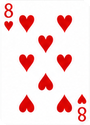
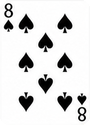
Pocket Eights
88 is a medium pair that opens from many positions and has more showdown value than the small pairs. It is an overpair on flops below Eight, an underpair on higher flops, and it remains sensitive to overcards, position, and stack depth after the flop.
How to play 88 by position and stack size
| Recommended action | UTG8-max | UTG18-max | LJ6-max | HJ6-max | CO6-max | BTN6-max | SB6-max |
|---|---|---|---|---|---|---|---|
| 100bb+ | Open | Open | Open | Open | Open | Open | Limp |
| 40-100bb | Open | Open | Open | Open | Open | Open | Limp |
| 27-40bb | Open | Open | Open | Open | Open | Open | Limp |
| 20-26bb | Open | Open | Open | Open | Open | Open | Limp |
| 16-19bb | Open | Open | Open | Open | Open | Open | Limp |
| 11-15bb | Open | Open | Open | Open | Jam | Jam | Limp |
| 7-10bb | Jam | Jam | Jam | Jam | Jam | Jam | Jam |
| 6bb- | Jam | Jam | Jam | Jam | Jam | Jam | Jam |
88 can open from early and late seats, with tighter sizing and ranges when players behind can apply pressure.
It can 3-bet against wide opens, but it is not a mandatory value 3-bet against a tight range.
In position, 88 can call more often because it can win at showdown without always making a set.
A shove can realize equity against a wide range, while deep stacks favor calls or smaller raises.
Do not assume a medium pair must continue simply because it is ahead of unpaired hands.
Strong against
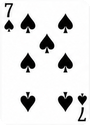
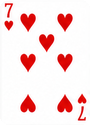
77 can call with a lower pair, making it a natural value target for 88.
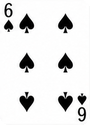
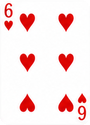
66 can set-mine or call with a lower pair, while 88 keeps the preflop edge.
Weak against
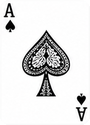
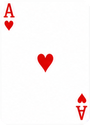 AA
AAAA is ahead of 88 preflop. 88 usually needs a set or a well-supported bluff-catching reason against continued pressure.
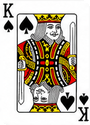
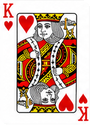 KK
KKKK is a higher pair that can value-bet while 88 has only a lower pair.
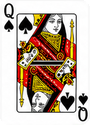
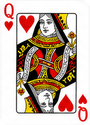 QQ
QQQQ is ahead before the flop, and 88 has little reason to build a large pot without a set.
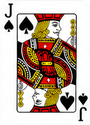
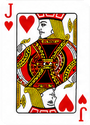 JJ
JJJJ is also higher than 88 and can continue for value against a lower pair.
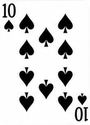
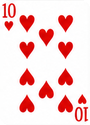 TT
TTTT is a higher pair, so 88 needs a set or a range with enough bluffs to continue.
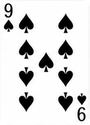
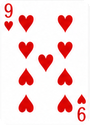 99
9999 is the nearest higher pair and can keep betting while 88 has only a pair.
Flop classes
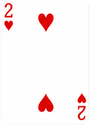
On 8♣ K♦ 2♥, 88 has flopped a set and can build value while checking the available draws.
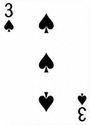
On A♠ 9♦ 3♣, 88 is an underpair with two usual outs to a set and some showdown value. Further overcards increase the pressure.
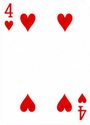
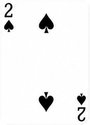
On 7♣ 4♥ 2♠, 88 is an overpair to the board and can bet for value without treating it as invulnerable.
Strategic notes
- Call: Continue more often in position when the 3-bet is not too large and effective stacks preserve both showdown and set value.
- Fold: Fold against tight ranges, poor prices, or out of position when future overcards are hard to navigate.
- Fold: Release 88 against a tight 4-bet, since the call needs too many favorable low-card runouts.
- Call: Continue only when the price and depth are exceptional and the opponent's range is wider than usual.
- Value: On 8♣ 6♦ 2♥, 88 has a set and can value-bet lower pairs and draws.
- Control: On 9♣ 5♦ 2♥, 88 is an overpair with some showdown value. Large bets still narrow the range it beats.
- Mistake: Do not call 88 an overpair on a flop containing a Ten, Jack, Queen, King, or Ace. The board's top card defines that distinction.