Small pair
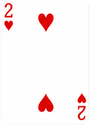
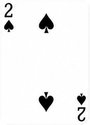
Pocket Deuces
22 is mainly a set-mining hand. Without a deuce on the flop, it is always an underpair, so its value comes from position, effective depth, and a cheap price rather than automatic aggression.
How to play 22 by position and stack size
| Recommended action | UTG8-max | UTG18-max | LJ6-max | HJ6-max | CO6-max | BTN6-max | SB6-max |
|---|---|---|---|---|---|---|---|
| 100bb+ | Fold | Fold | Fold | Open | Open | Open | Limp |
| 40-100bb | Fold | Fold | Fold | Open | Open | Open | Limp |
| 27-40bb | Fold | Fold | Fold | Open | Open | Open | Limp |
| 20-26bb | Fold | Fold | Fold | Open | Open | Jam | Jam |
| 16-19bb | Fold | Fold | Fold | Fold | Jam | Jam | Jam |
| 11-15bb | Fold | Fold | Fold | Jam | Jam | Jam | Jam |
| 7-10bb | Fold | Jam | Jam | Jam | Jam | Jam | Jam |
| 6bb- | Jam | Jam | Jam | Jam | Jam | Jam | Jam |
From the cutoff or button, 22 can open more often when stacks are deep enough to win a useful pot after a set.
It is not a default 3-bet for value, and deep 3-bet pots rarely offer the right set-mining price.
The call needs a realistic chance to win more after a set, especially against a strong opener.
A shove can be reasonable in a tournament spot, but 22 should not be jammed simply because it is a pair.
Two outs are not enough when the price and implied odds do not support a call.
Strong against
No strong matchup to highlight.
Weak against
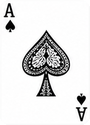
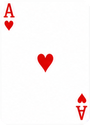 AA
AAAA is far ahead of 22 preflop. 22 relies on a concealed set to win a large pot when AA continues.
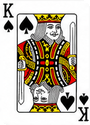
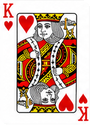 KK
KKKK is another premium pair, while 22 needs a set or a very specific bluff-catching reason to continue.
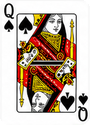
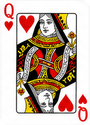 QQ
QQQQ is ahead of 22 before the flop. A set is the main way 22 can turn this into a substantial value situation.
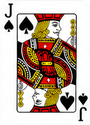
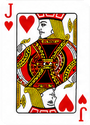 JJ
JJJJ is higher than 22 and can value-bet against the lower pair.
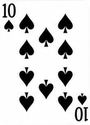
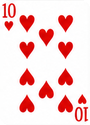 TT
TTTT can continue with a higher pair, leaving 22 dependent on a set or a narrow bluff-catching plan.
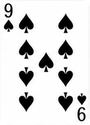
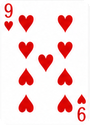 99
9999 is a higher pair that can target calls from 22 when the range remains value-heavy.
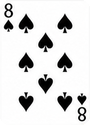
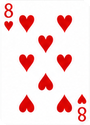 88
8888 also has the higher starting pair, so 22 is mostly looking for a set before continuing strongly.
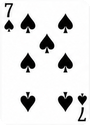
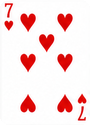 77
7777 can take value from a lower pair, with 22 needing a set to reverse the situation.
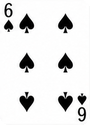
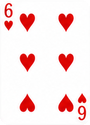 66
6666 is higher than 22 and can keep extracting value from one-pair calls.
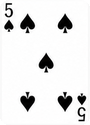
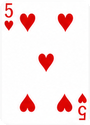 55
5555 is another higher pair that leaves 22 with little one-pair value.
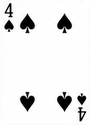
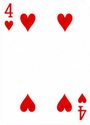 44
4444 can value-bet against 22 while still allowing some lower-pair calls.
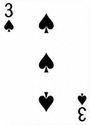
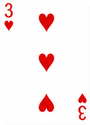 33
3333 is the nearest higher pair and can extract value when 22 continues.
Flop classes
On 2♦ 8♦ K♣, 22 has flopped a set and can take a value line, with sizing guided by draws and the opponent's range.
On A♥ 9♣ 4♦, 22 is below the board's pairable cards and is mainly a bluff-catcher against missed hands.
On 8♣ 5♦ 3♠, 22 is an underpair with two usual outs to a set. It can sometimes reach a cheap showdown against missed hands.
Strategic notes
- Call: Continue mainly in position when the 3-bet is small and the effective stacks leave enough implied odds for a set.
- Fold: Fold more often out of position, against tight ranges, or when stacks are too shallow for set mining.
- Jam: Use a shove only as a deliberate short-stack or tournament adjustment, never as a universal response.
- Fold: Usually fold because a 4-bet range contains many higher pairs and the price rarely supports chasing a set.
- Call: Continue only with unusually deep effective stacks and a sizing that gives a clear mathematical reason.
- Value: A flopped set is a strong value hand, while a low overpair still has to respect higher pairs and coordinated draws.
- Control: As an underpair, 22 has limited showdown value and two usual outs to a set. Position and the opponent's sizing decide whether it can reach a cheap showdown.
- Mistake: Do not treat every low flop as a reason to bet three streets. An overpair to the board is not automatically an overpair to the opponent's range.